
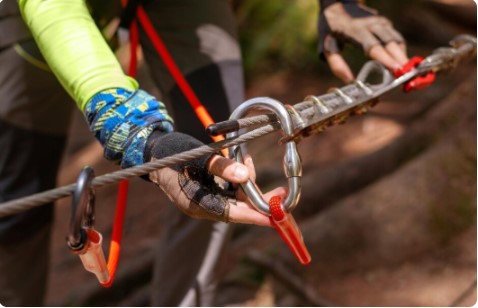
Safety is the paramount concern for any aerial adventure park or climbing facility. The primary link between the participant and the safety line is the specialized equipment designed to provide support and security at height.
Choosing the right ropes course harness requires a deep understanding of user demographics, frequency of use, and the specific technical requirements of your course.
By evaluating the following six factors, operators can ensure they provide a secure and comfortable experience for every guest.
1. Durability and Material Longevity
A high-volume adventure park subjects its equipment to constant wear and tear. When evaluating a ropes course harness, the quality of the webbing and the strength of the stitching are critical.
Most professional-grade gear is constructed from high-tenacity polyester or nylon, which offers excellent abrasion resistance.
It is vital to select materials that can withstand UV exposure and friction from various safety lanyards without fraying quickly. High-quality buckles made from stainless steel or reinforced aluminum also contribute to the overall lifespan of the product.
2. Ease of Adjustment and Sizing
Ropes courses often cater to a wide range of body types, from young children to tall adults. An ideal ropes course harness should feature a highly adjustable design that allows staff to fit participants quickly and accurately.
Look for color-coded leg loops or webbing to help technicians distinguish between the left and right sides, which streamlines the gearing-up process.
Most operators prefer universal-sized options to reduce the need for a massive inventory, but having dedicated small and large sizes ensures a more ergonomic fit for outliers.
3. Comfort and Weight Distribution
While safety is the main goal, the user experience depends heavily on comfort. A harness that digs into the waist or thighs can distract a participant from enjoying the activity.
Many modern designs incorporate padded waist belts and leg loops to distribute the user’s weight more evenly during suspension.
This is particularly important for courses that involve long zip lines or elements where participants may spend significant time hanging. Breathable mesh linings can also help prevent heat buildup during summer months.
4. Choice Between Full-Body and Sit Styles
Depending on the age of the participants and the nature of the obstacles, you must choose between different configurations.
A full-body ropes course harness is often the preferred choice for children or beginners because it prevents the wearer from flipping upside down in a fall by keeping the center of gravity low.
For more advanced participants or courses with upright climbing elements, a sit harness may offer more freedom of movement. Many operators choose a hybrid approach, using full-body options for maximum security across all demographics.
5. Integration with Connection Systems
The harness must be compatible with your specific belay or continuous clip-in system. Some harnesses feature a single high attachment point, while others have multiple gear loops or reinforced belay loops. Ensure that the attachment points are easily accessible for both the participant and the instructor.
This compatibility is essential for maintaining a smooth flow on the course and preventing technical errors during transitions between different aerial elements.
6. Ease of Inspection and Retirement
Safety equipment must be inspected daily to ensure it remains in top condition. Manufacturers who include clear inspection indicators, such as contrasting internal threads that show through when the webbing is excessively worn, provide a significant advantage for safety officers.
Additionally, consider the manufacturer’s stated retirement age for the equipment. A ropes course harness typically has a shelf life and a service life defined by the manufacturer, and having clear documentation for these standards is necessary for insurance and regulatory compliance.
