
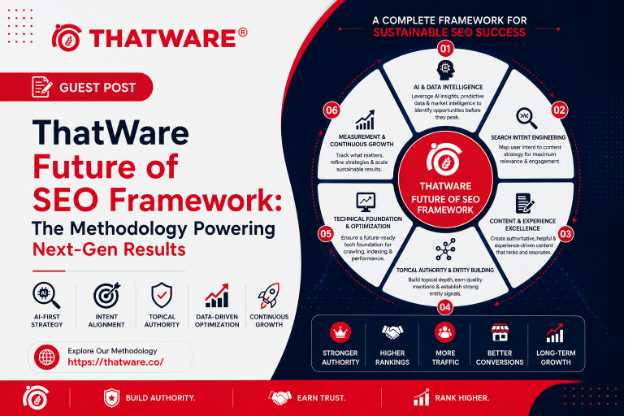
In a landscape where every SEO agency is claiming to offer “AI-powered SEO” and “next-generation strategies,” it’s worth examining what genuine innovation in search methodology actually looks like — and why the frameworks that produce lasting results are built differently from the ones optimizing for short-term gains.
The ThatWare future of SEO framework represents a specific approach to search optimization that integrates multiple advanced disciplines into a coherent, evolving methodology. Let’s break down what that means in practice.
The Core Principles
Most traditional SEO frameworks were built around a relatively simple model: identify keywords, create content, build links, monitor rankings. Iterate. This model worked when search was primarily about keyword matching and link authority.
The new model is more complex. Search success in 2026 requires understanding entities and how they’re represented across the web, not just keywords and their search volume. It requires content that demonstrates genuine expertise, not just topical relevance. It requires technical foundations that serve both traditional crawlers and AI retrieval systems. And it requires the kind of long-term brand authority building that transcends any single algorithm update.
The ThatWare future of SEO framework is built around these principles: entity-first optimization, E-E-A-T development as a core program rather than a checklist, GEO/AIEO strategy integrated with traditional technical SEO, and predictive content strategy informed by AI-driven signal analysis.
What Makes It Different
The distinction between legacy SEO methodology and next-generation frameworks isn’t primarily about tools — it’s about the strategic model underlying the work.
Legacy frameworks treat SEO as a technical problem: fix the site issues, create the content, build the links. Next-generation frameworks treat SEO as a brand authority problem: build the entity, develop the expertise signals, earn the citations, and maintain the technical foundations that allow that authority to be expressed in search results.
The difference shows up most clearly in outcomes over time. Technical-first SEO tends to produce results that are vulnerable to algorithm shifts — because they’re built on optimizations that can be devalued or penalized when the algorithm changes. Authority-first SEO builds something more durable: genuine brand credibility that AI systems and search engines both recognize, regardless of exactly how their ranking criteria evolve.
Future of SEO vs traditional SEO services isn’t really a competition between two approaches — it’s a question of whether your optimization strategy is positioned for the search landscape as it is now and as it will be, or for how it was three years ago. Working with teams that have developed and continue to refine genuine next-generation methodology is the most reliable path to sustained search visibility in an environment that will continue to change.
