
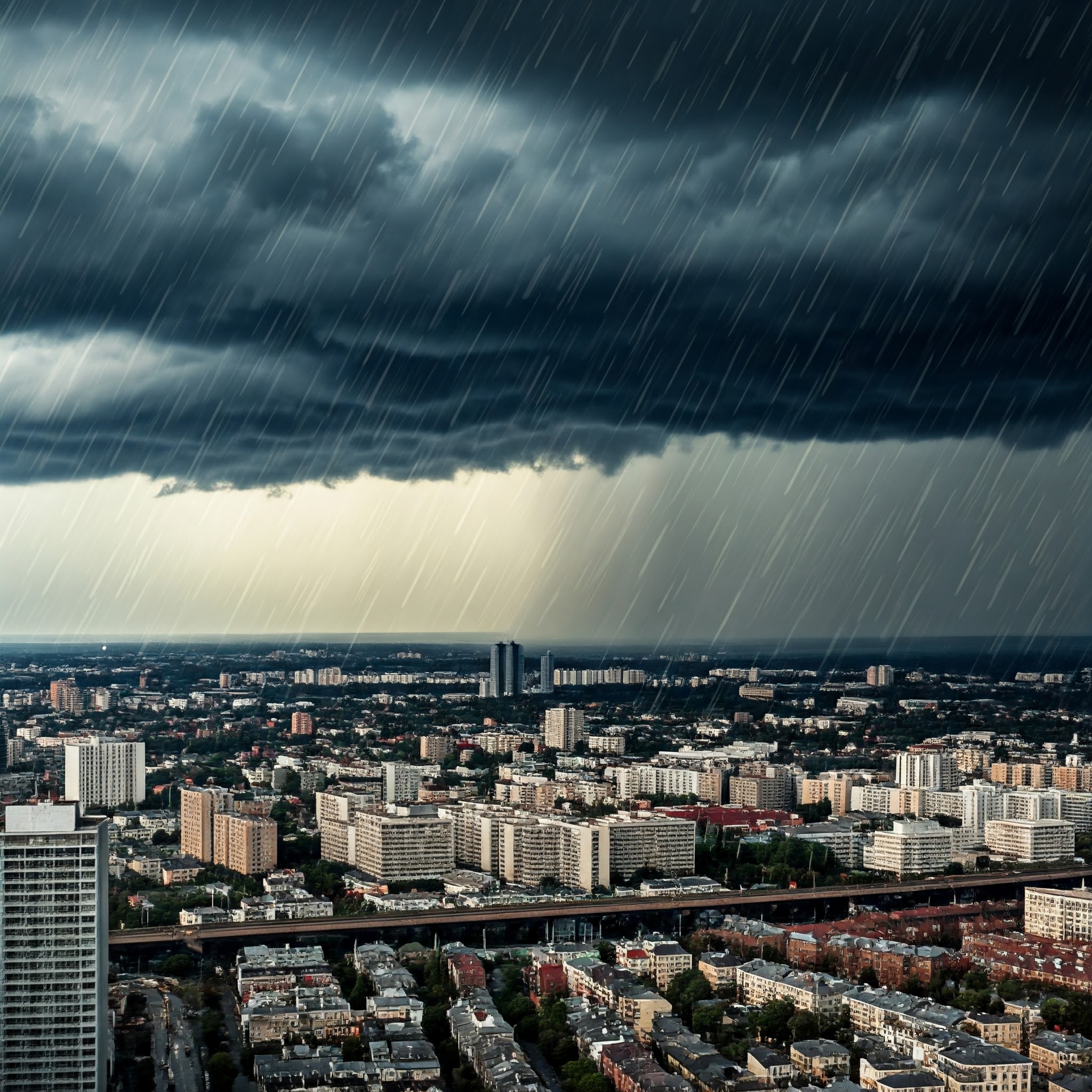
“The Met Office issues extreme rainfall warnings; currently the center of attention in its discussions is Delhi and nearby weather. Unusual situations have arisen regarding the weather. On Friday, rainfall, ranging from moderate to heavy, was recorded in the city bringing about drastic decline of temperature along with disruptions in different sectors. With predictions of further rainfall and possible hailstorms, the article shall be looking into the effects of the extreme rainfall warning, what to expect in the coming days, and how residents can prepare for the adverse weather conditions.”

Delhi’s Weather on Friday: A Dramatic Change
It was quite a surprise for many when the sudden flash floods warned on Friday while the India Meteorological Department (IMD) had a warning of hailstorms for the area. The rainfall occurred early in the morning, and by the afternoon, significant amounts of precipitation were recorded in some places in Delhi.
- Traffic Disruptions: Heavy rains created avalanches of traffic jams in South, Central, and North Delhi. Waterlogging was most prominent in low-lying places, especially in and around Delhi University’s North Campus, which rendered commuting in the city extremely difficult.
- Temperature Plunge: The continuous rains reduced the maximum temperature to a cool 15°C-about 10°C lower than yesterday’s readings. The minimum temperature also fell, making it one of the coldest days of the season.
- Air Quality Improvement: Unexpectedly, heavy rain brought good news for air quality in Delhi. On Saturday morning, as particulate matter was washed away from the air due to rain, the air quality shifted from a very poor category to moderate at one instant for AQI 179.
IMD’s Weather Forecast: What to Expect in the Coming Days
From the new updates of IMD, the extreme rainfall will continue tormenting Delhi, NCR, and other parts of North India for the coming few days. The extreme rainfall alert suggests that the area will receive moderate to heavy downpours with thunderstorms and may also face the threat of hailstorms.
- Thunderstorms and Hailstorms: The IMD forecasted thunderstorms along with hail in Delhi, Haryana, Uttar Pradesh, and some parts of Rajasthan for over the weekend. These are likely to be worsened in the days to come, with extreme rainfall happening recurrently.
- Regional Forecast:
- Delhi & NCR: Heaviest rains will be experienced in the south, central and northern parts of Delhi, including places like Palam, Safdarjung and IGI Airport.
- Surrounding Areas: Even moderate to heavy raining will continue this time over Gurugam, Faridabad, Noida, and Manesar, accompanied by lightning.
- Cold Wave Conditions: Starting Sunday, parts of Himachal Pradesh will feel the effect of cold wave conditions as parts of the Western Himalayan region experience widespread rainfall and snowfall. IMD issues weather warning in Uttarakhand and Himachal Pradesh and solitary heavy rain and snowfall for the coming days.
- Further Impact on Delhi: Extreme rainfall alerts The cold waves are expected to continue over the weekend, with the likelihood of further temperature drops, dipping down to 12 until Saturday night. The maximum temperature is likely to hover around 16C, directly contributing to the ongoing cold wave across the region.
The Impact of the Current Weather on Daily Life
Prompt neglect of heavy rains has totally changed lives in Delhi. They have started with a bang: starting from disrupting roads and air quality, it’s just one more instance where nature seems to have flexed its muscles quite mightily and at the same time unpredictably.
- Traffic and Transport:
- Waterlogging: Water logging has gripped areas, especially the flat ones. Roads got filled, and then major jams existed across the city, which delayed the daily movement of people in Delhi.
- Public Transport: While Delhi’s metro system continued to function smoothly, buses and local trains faced delays due to the torrential rain.
- Tree Uprootings:
- Calamity struck cities as heavy rains with gusty winds uprooted trees in different places creating an even better blockage for roads and disrupted electricity supply to some regions.
- Agricultural Concerns:
- The rain has been very good for agriculture but has some drawbacks as well. Most places of India are benefitting in the form of crop yields; while in some parts of Punjab, Haryana, and Rajasthan, flooded and hail occurred with high velocity, which damages crops on the fields.
- Air Quality Improvements:
- The heavy rain has washed away pollutants, leading to a reduction in the particulate matter in the atmosphere. This has resulted in a noticeable improvement in the air quality, although it remains in the “moderate” range.
Why the Weather is Changing: The Role of the Western Disturbance
The extreme rainfall being experienced in Delhi and surrounding regions is largely due to a Western Disturbance, a weather pattern that brings moisture-laden winds from the Mediterranean.
- Western Disturbance:
- A fresh and active Western disturbance is expected to affect the Western Himalayan region and the adjoining plains from December 27 to January 1, 2025. Under its influence, the likelihood of widespread rainfall, including heavy falls, increases.
- Thunderstorms: The interaction between the Western Disturbance and the easterly winds leads to the development of thunderstorms and hailstorms, which is contributing to the extreme rainfall alerts being issued for Delhi and other parts of North India.
- Effect on Temperature:
- The extreme rainfall has led to a significant drop in temperatures across the region. The weather is expected to remain cooler than usual, with night temperatures expected to remain low.
Safety Tips and Precautions During Extreme Weather
As Delhi and its surrounding regions continue to experience extreme rainfall alerts, it’s important to take precautions to stay safe.
- Travel Precautions:
- Avoid unnecessary travel during heavy rainfall. If you must go out, carry an umbrella and drive cautiously.
- Check traffic updates regularly to avoid flooded roads or blocked routes due to fallen trees.
- Home Safety:
- Ensure that your windows are securely shut and that there are no leaks in your roof to prevent water from entering your home.
- Clear any debris from gutters to avoid water logging around your home.
- Health Concerns:
- Wet and cold conditions can lead to health issues such as colds, coughs, and joint pain. Dress warmly and keep yourself dry during the rains.
- Be mindful of the air quality, especially if you are in the “moderate” AQI range.
- Agricultural Advisory:
- Farmers in regions likely to experience extreme rainfall should take precautions to protect crops from hailstorms and flooding. It is advisable to harvest crops that are susceptible to damage.
Conclusion: What Lies Ahead?
The extreme rainfall alert issued by the IMD for Delhi and neighboring areas signals a period of unpredictable weather that could last throughout the week. With moderate to heavy rainfall expected to continue, residents should remain vigilant and prepared for potential disruptions. From traffic delays to improved air quality, the impact of these weather conditions will vary, but it is clear that the changing weather is a force to be reckoned with.
As the Western Disturbance continues to influence the region, it is important to stay updated on the latest weather forecasts and alerts to ensure your safety. The extreme rainfall over the coming days serves as a reminder of the volatile nature of weather, and the need for preparedness in the face of changing climatic patterns.
If you want to know about Pittsburgh vs Toledo match than click hear.
